The second photographer, Chris de Bode, realized that the young guy consuming the contents of a nappy was one he would not want. He was photographing the plight of the refugees looking for safety in northern Cameroon. At the same time, he came across the person, regarded as disabled, sitting outside a hut in the warmth of the critical African sun. “I was doing this work for some years,” he instructed the BBC.
“And there may usually be some dignity or something accessible where you observed: ‘Things may be first-class.'” The photographer trails off. It turned into the worst moment of his ride to Meme – a village that had not visible an NGO for months before his arrival, leaving many surviving on simply one meal a day. But then, his trip to photograph many refugees trying to survive in an inhospitable panorama has been one of the most harrowing of his career.
“I am quite experienced; I have visited plenty of refugees everywhere globally,” he said. “But what I noticed here was the makeshift camps, wherein there were no meals, there were no bushes, and there may be no color. “The simplest thing human beings can do is loaf around, stay inside their little tent, and look forward to the day after today.” These are a number of the victims of the Lake Chad crisis, which impacts 17 million people across four international locations – Cameroon, Chad, Niger, and Nigeria.
Despite the determined want, the emergency here, due to a mixture of violence and weather alternates, has failed to make a lasting impression. It has led to it being noted as “the maximum unnoticed crisis in the world.” So many human beings have been displaced that northern Cameroon’s most effective legitimate refugee camp, in Minawao, has already been “crushed” with humans, in step with Alberto Jordan, head of Médecins Sans Frontières (MSF) Cameroon.
A state of emergency was declared around Lake Chad.
Boko Haram disaster: The sufferers who fled over Lake Chad
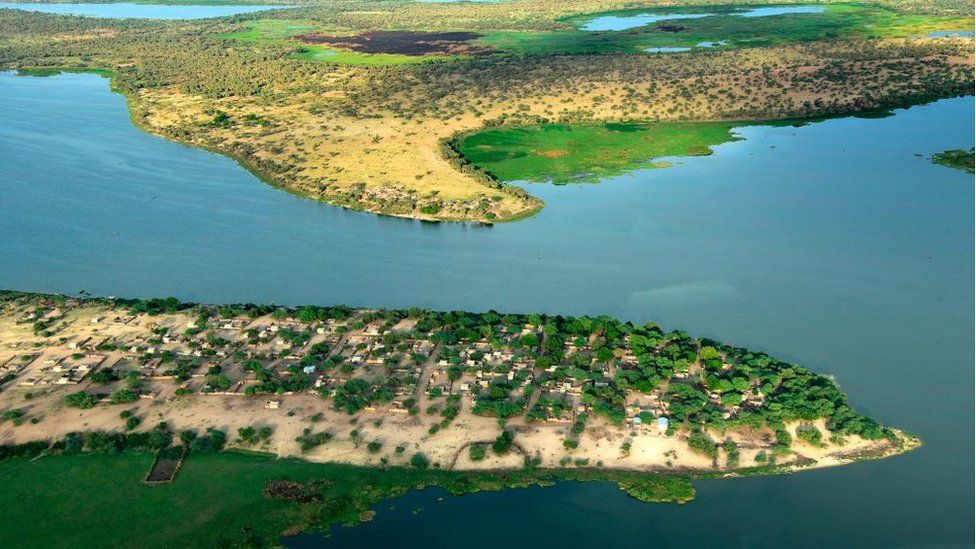
Why is one of the world’s largest lakes disappearing?
It means that lots of those who’ve fled the violence of their domestic villages and cities are nonetheless finding themselves caught among armed businesses like Boko Haram and the armies of several international locations.
That identical violence prevents resource corporations like MSF from accomplishing the most in need. “We understand that human beings who have been displaced are being caught in the crossfire,” Mr. Jodra informed the BBC.
“From time to time, we see sufferers, but we have not been given the right of entry to those locations.” The risky nature of the struggle has meant that newshounds have also struggled to gain entry, so the stories of the humans residing here go untold occasionally. So de Bode’s snapshots, taken through an experience of the ravaged location with the British Red Cross earlier this year, had been an unprecedented glimpse of a hassle. At the time, regardless of having two IDP camps housing 18,000 humans on its edges, non-governmental agencies – and the great deal wanted aid they created – had failed to attain it for months.
Why is Lake Chad a ‘silent emergency’?
At a meeting of the United Nations earlier this 12 months, it was advised that $1.5bn (£1.16bn) in resources was needed to assist the region this year. But, competing against so many different crises around the sector, it’s miles from suffering to get the eye it wishes. The cause is complex, says the Red Cross’s Alex Clare. “It is set food and security, and those going hungry, but the causes aren’t just climate trade or one-armed group – it isn’t always clear to explain for, and it isn’t easy to apprehend,” she stated. It is also hampered by the reality that “it isn’t always an unexpected onset.”
“It does not hit you in the face from one day to any other,” she stated, “If you have an earthquake, this is something to react to immediately. But that has been constructed when you consider that 2009, and considering getting worse, considering 2014.” It is, de Bode says, a determined vicinity – each for individuals who had fled their own houses and those who lived there already. “What I felt once I changed into there may be the vast burden, not handiest at those who fled the warfare but also at the people who receive these people,” de Bode stated. “The family might have something for the small children, but nothing for the older ones. They are sent to the market to beg.
“To have one meal a day is a success.” However, there’s nonetheless hope within the maximum determined situations – even in which you least expect it. For de Bode, it came from a family torn apart by the most brutal methods. Made is just seven years old; however, his frame is covered in scars he was given the night a group of militants set the bedroom he and his brothers had been sound asleep in the light. But Madou is the fortunate one. Two brothers continue to be in the sanatorium, and one died in the flames that night. He and his mother are now two of the hundreds of thousands displaced around Lake Chad, living in a makeshift hut like many others.
And yet, there has been something special there, says de Bode. “Sometimes, you’re touched by way of the situation; you may by no means surely see it coming. “But I turned into a hit with the aid of the love between the mom and son. We tend to neglect when we examine statistics: it’s tougher to find the human issue. It is encouraging to see the love – I wish they’ll find a manner to hold their lives, that this may be inside the beyond.” See more of Chris de Bode’s pix at an exhibition of his work, One Meal a Day: The Lake Chad Crisis in Pictures, at St Martin-in-the-Fields’ courtyard, London, until Sunday 25 June
READ MORE :